Flush Smart Month: How Intelligent Pump Controls Help Fight Ragging and Keep Wastewater Moving
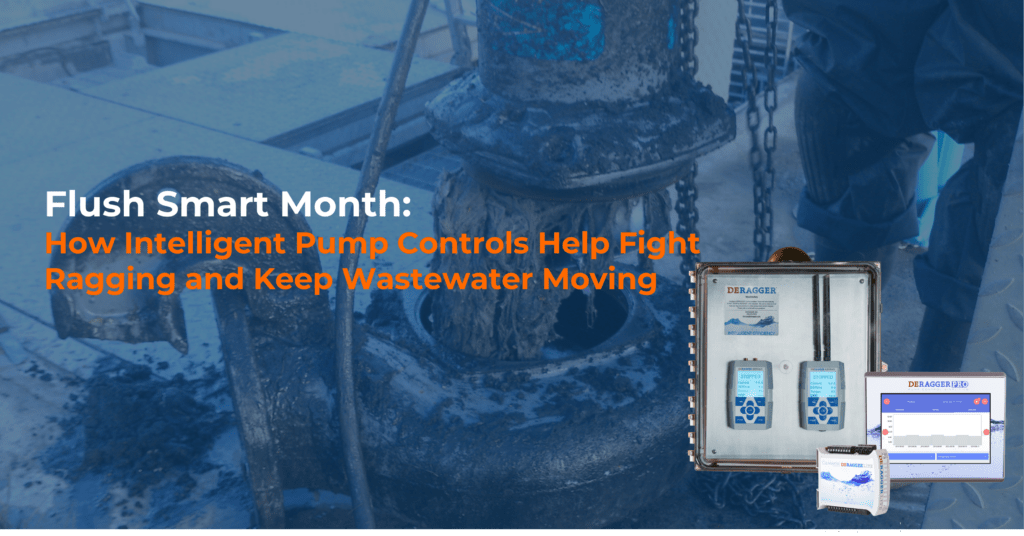
A pump doesn’t have to stop running to become a problem.
Long before a pump fails, fibrous materials can begin wrapping around the impeller, reducing flow, increasing energy consumption, and forcing the pump to work harder than intended. Wastewater operators know this problem as pump ragging, and it’s becoming increasingly common in today’s wastewater systems.
Every July, the Responsible Flushing Alliance’s Flush Smart Month campaign reminds the public to flush only the 3 Ps: pee, poo, and toilet paper. While education is an important part of the solution, wastewater professionals know that improper flushing continues year-round. That’s why many utilities are combining public education with intelligent technologies that automatically detect and manage ragging before it leads to costly downtime.
What Is Pump Ragging?
Pump ragging occurs when fibrous materials such as wipes, cloths, stringy debris, and other non-flushable items wrap around a pump’s impeller. As more material accumulates, pump performance begins to decline.
Operators may experience:
- Reduced flow
- Lower pumping efficiency
- Increased power consumption
- Frequent nuisance alarms
- Pump overheating
- Manual cleaning requirements
- Unexpected downtime
Even well-designed solids-handling pumps can experience ragging when wastewater contains increasing amounts of disposable wipes and fibrous materials.
How Can You Tell If a Pump Is Ragged?
A ragged pump doesn’t always fail immediately. In many cases, operators first notice subtle changes in performance, including:
- Increased motor amperage
- Reduced flow rates
- Longer pump run times
- Higher energy consumption
- Frequent nuisance alarms
- Reduced hydraulic efficiency
- More frequent maintenance calls
Without intervention, these warning signs often lead to manual cleaning, increased operating costs, and unplanned downtime.
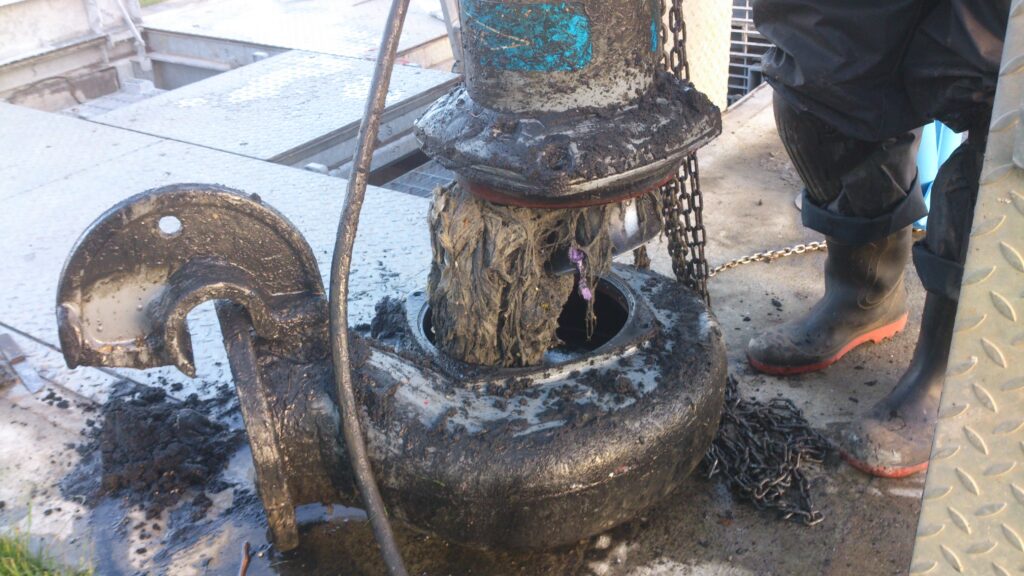
Why Ragging Is Becoming More Common
Today’s wastewater looks very different from what it did twenty years ago. Disposable cleaning products, disinfecting wipes, personal hygiene wipes, and other synthetic materials have become increasingly common in homes and businesses. Even products marketed as “flushable” often remain intact long enough to wrap around pump impellers, reducing hydraulic performance.
For wastewater operators, that means more maintenance and less time spent on higher-value work.
The True Cost of Pulling a Pump
When pumps become heavily ragged, maintenance crews often have only one option:
Pull the pump.
For many wastewater utilities, this cycle repeats week after week.
The question becomes: what if the pump could recognize ragging and respond before operators ever had to pull it?
Manual cleaning requires equipment, labor, and valuable time. Depending on the lift station, operators may also face confined space procedures, traffic control, or emergency response situations. These maintenance events significantly increase operating costs while reducing overall system reliability.
A Smarter Way to Manage Ragging
Instead of waiting for a clogged pump to fail, many municipalities are turning to intelligent pump controls that detect changing pump performance before a complete blockage occurs.
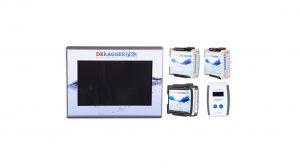
DERAGGER® Intelligent Controls continuously monitor pump operation and automatically initiate deragging cycles when ragging is detected. Rather than relying on scheduled maintenance or operator intervention, DERAGGER responds automatically, helping restore pump performance while keeping wastewater moving.
How DERAGGER® Works
Using Real Time Pump Protection™, DERAGGER continuously monitors the pump’s operating characteristics. When it detects changes consistent with ragging, it automatically initiates a deragging cycle to clear the impeller before a major blockage occurs. By clearing rags before they become serious obstructions, DERAGGER helps operators maintain pump performance with less manual intervention.
Benefits of Intelligent Deragging
Rather than reacting to pump failures after they occur, DERAGGER shifts maintenance from reactive to proactive by recognizing the early signs of ragging and responding automatically.
DERAGGER helps municipalities:
- Reduce manual pump cleaning
- Minimize emergency maintenance
- Restore hydraulic performance
- Improve pumping efficiency
- Reduce energy consumption
- Extend pump service life
- Increase overall system reliability
- Reduce unplanned downtime
For utilities managing dozens or even hundreds of lift stations, these improvements can add up to substantial savings in labor, maintenance, and operating costs.
The Journey of a Ragged Pump
A pump doesn’t fail all at once. Ragging is often a gradual process.

Case Study: From Frequent Failures to Financial Savings
A pump station serving approximately 13,000 residents in Half Moon Bay, California, struggled with frequent ragging caused by wipes and other fibrous materials. Pumps clogged approximately twice each week, requiring 45 minutes to an hour of manual cleaning every time.
Ragging reduced flow rates, increased pump run times, raised energy consumption, and required staff to perform repeated manual cleanings. Beyond labor costs, employees were regularly exposed to untreated wastewater during maintenance, posing additional safety risks.
The Sewer Authority installed DERAGGER® Intelligent Controls.
Using Real Time Pump Protection™, DERAGGER continuously monitors pump operating characteristics. When it detects conditions consistent with ragging, it automatically initiates a deragging cycle to clear accumulated debris before a major blockage develops.
After installing DERAGGER®, the utility achieved:
- Complete elimination of ragging
- 19% reduction in energy consumption
- Monthly labor savings of $735
- Annual savings of $14,820
- Improved worker safety
- Extended pump component life
- Reduced maintenance requirements
The result was a more reliable pump station, lower operating costs, and more time for operators to focus on proactive system maintenance instead of reacting to repeated pump failures.
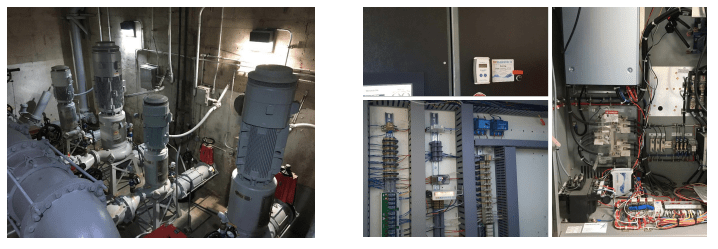
Education and Automation Work Together
Public education campaigns like Flush Smart Month remain essential for reducing the amount of debris entering wastewater systems. Encouraging residents to flush only toilet paper helps protect both household plumbing and municipal infrastructure.
But wastewater professionals also understand that education alone cannot eliminate improper flushing. That’s why intelligent technologies like DERAGGER have become an important part of modern wastewater operations.
By automatically detecting and responding to ragging events, DERAGGER helps utilities spend less time reacting to maintenance issues and more time focusing on system performance.
Building More Resilient Wastewater Systems
Keeping wastewater flowing requires more than durable pumps. It requires systems that can adapt to today’s changing waste stream.
As flushable wipes and other fibrous materials continue entering municipal sewer systems, intelligent controls provide another layer of protection by helping pumps maintain peak performance with minimal operator involvement.
This Flush Smart Month, remember the simplest rule: Only flush the 3 Ps: pee, poo, and toilet paper.

Every flush matters.
But wastewater professionals also know that today’s collection systems must be prepared for the realities of modern wastewater.
DERAGGER® Intelligent Controls help utilities detect ragging early, automatically initiate deragging cycles, reduce maintenance demands, and keep wastewater moving with fewer interruptions, greater efficiency, and lower operating costs.