Flush Smart Month: Why Today’s Wastewater Calls for Smarter Pump Station Design
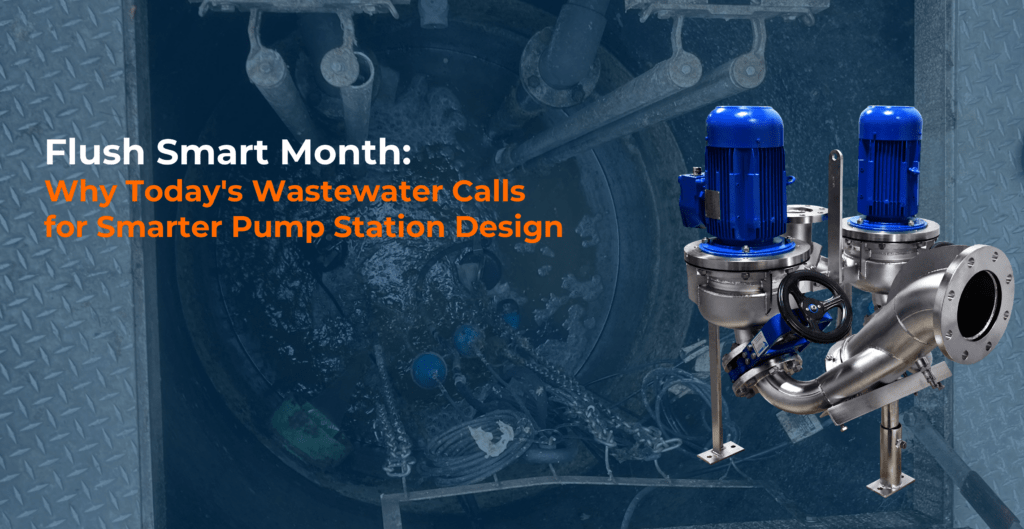
Every day, wastewater operators work to keep lift stations running despite changing wastewater conditions. Today’s collection systems handle far more wipes, grease, and debris than they were originally designed for, increasing maintenance demands and operational costs.
That’s one reason the Responsible Flushing Alliance’s Flush Smart Month campaign is so important; it reminds the public that what they flush directly affects the performance of municipal wastewater infrastructure.
Despite public education efforts, wastewater systems continue to receive items that should never be flushed. Products such as “flushable” wipes, paper towels, feminine hygiene products, dental floss, and other debris continue to enter municipal sewer systems every day.
While public awareness is improving, wastewater professionals know the reality:
Improper flushing isn’t going away anytime soon.
That raises an important question:
Is your lift station designed for today’s wastewater?
Wastewater Has Changed
Many municipal lift stations still in operation today were designed decades ago, long before disposable wipes, disinfecting wipes, and other synthetic products became common.
Today’s wastewater often contains:
- Flushable wipes and baby wipes
- Paper towels
- Fibrous materials
- Plastics
- Fats, oils, and grease (FOG)
- Food waste
- Miscellaneous debris
These materials pose new challenges for infrastructure originally designed to move wastewater, not modern disposable products.
Improper Flushing Doesn’t Stop at the Toilet
Most consumers never see what happens after they flush. Wastewater travels through miles of sewer pipes before reaching municipal lift stations. Along the way, wipes and fibrous materials combine with fats, oils, and grease (FOG) to create blockages that reduce system performance and increase maintenance.
Even when pumps continue operating, utilities often spend significant time removing accumulated debris from wet wells and restoring equipment to peak performance.
Why Traditional Wet Wells Become Maintenance Hotspots
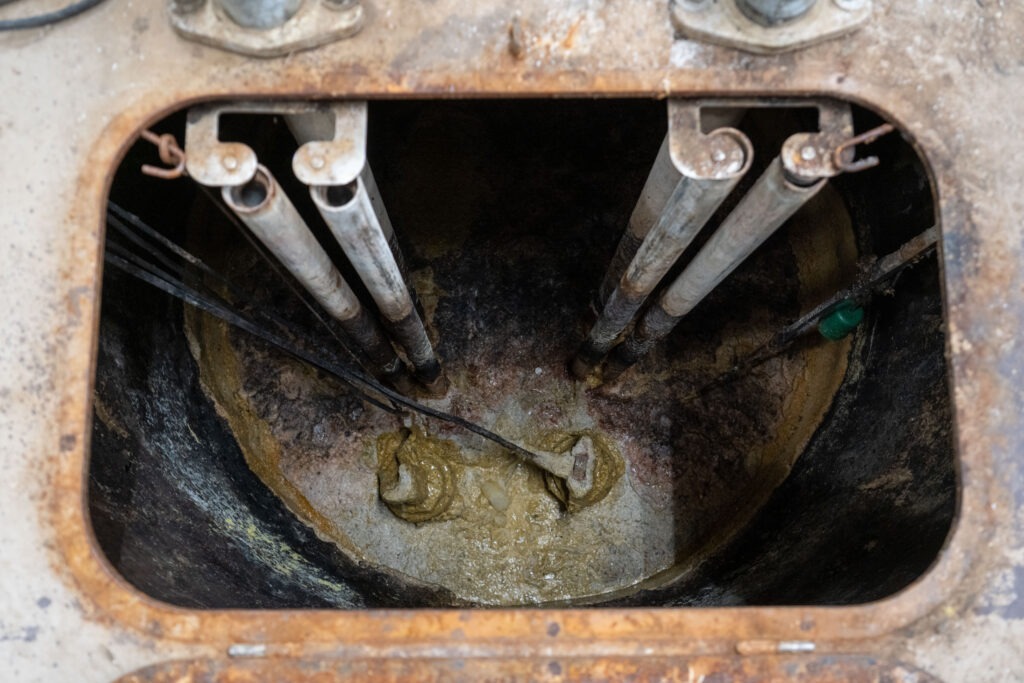
Conventional lift stations rely on wet wells to collect wastewater before it is pumped downstream. While this design has served municipalities for decades, it also creates an environment where wipes, grease, and other debris can settle and accumulate.
As today’s wastewater contains more fibrous materials and non-flushable products than ever before, wet wells often become ongoing maintenance hotspots. Operators must manage not only the debris itself but also the time, labor, and safety concerns involved in keeping lift stations operating efficiently.
Common maintenance challenges include:
- Rag accumulation around pumps
- Grease and FOG buildup
- Odors from stagnant wastewater
- Hydrogen sulfide (H2S) corrosion
- Vacuum truck cleaning
- Wet well washdowns
- Confined space entry for inspection and maintenance
- Rising labor and operating costs
As maintenance demands increase, many municipalities are asking whether traditional wet well designs remain the best solution for today’s wastewater.
A Typical Day for a Lift Station Operator
For many wastewater professionals, maintenance doesn’t stop after one clog is cleared.
A typical day may include:
7:00 AM – Respond to an odor complaint from a nearby neighborhood.
9:30 AM – Schedule a vacuum truck to clean accumulated debris from a wet well.
1:00 PM – Prepare for confined space entry to remove rags and grease.
3:00 PM – Restore a lift station after another ragging event.
Now imagine eliminating many of those wet-well maintenance tasks altogether.
That’s exactly the question many municipalities, consulting engineers, and facility owners are asking as maintenance costs continue to rise and wastewater conditions become more challenging. Rather than continuing to maintain traditional wet wells, many are exploring new approaches that reduce maintenance before it starts.
A Different Approach to Wastewater Pump Stations
Rather than accepting debris accumulation as part of normal operation, many municipalities are rethinking pump station design altogether.
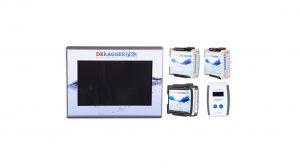
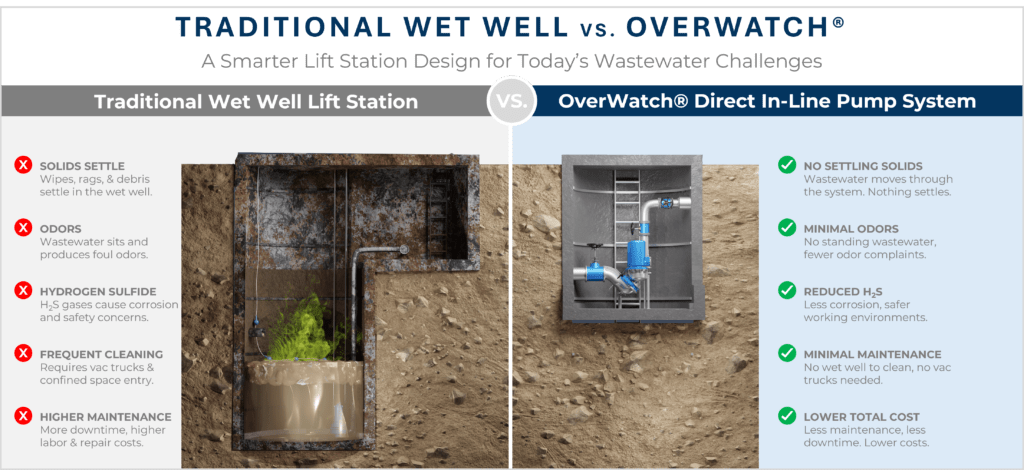
The OverWatch® Direct In-Line Pump System eliminates the traditional wet well by pumping wastewater directly through the system as it arrives. Without a wet well, there is significantly less opportunity for solids, wipes, grease, and other debris to settle and accumulate.
The result is a cleaner, more efficient wastewater pumping solution.
How OverWatch® Helps Reduce Maintenance
By eliminating the wet well, OverWatch® helps municipalities address many of the challenges associated with today’s wastewater.
Key benefits include:
- Eliminates wet well maintenance
- Reduces confined space entry
- Minimizes odor complaints
- Reduces hydrogen sulfide corrosion
- Minimizes debris accumulation
- Lowers lifecycle costs
- Simplifies lift station maintenance
For utilities facing increasing maintenance demands, these advantages can translate into lower operating costs, improved reliability, and greater system uptime.
Case Study: OverWatch® Eliminates Wipe-Related Maintenance at a Texas High-Rise
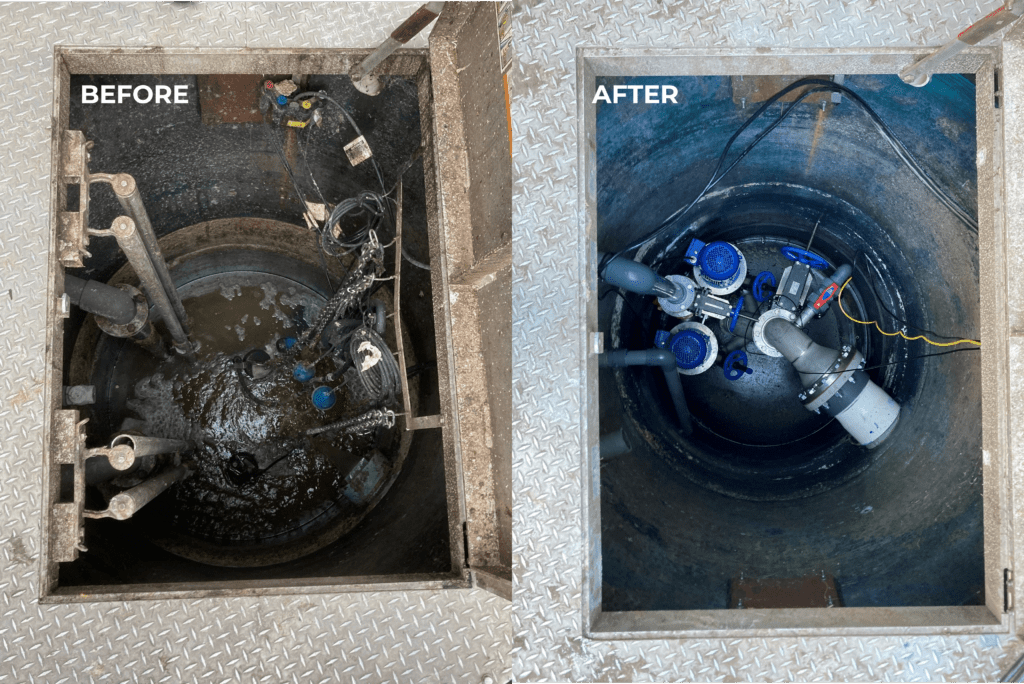
A 23-story, 320-unit residential high-rise in Austin, Texas, struggled with chronic pump clogging caused by “flushable” wipes. As wipes accumulated and solidified inside the wet well, the property experienced frequent pump failures, emergency maintenance calls, and persistent odor complaints.
Despite educating residents about proper flushing practices, the building management had little control over what entered the wastewater system. They needed a long-term solution that addressed the root cause of the problem, not just the symptoms.
They selected the OverWatch® Direct In-Line Pump System, eliminating the traditional wet well entirely.
After installing OverWatch®, the property experienced:
- Elimination of chronic wipe-related clogging
- Dramatically reduced emergency maintenance calls
- Elimination of persistent wet well odors
- Improved system reliability
- A cleaner, dry pump station environment
- Greater resident satisfaction
By eliminating the wet well, the OverWatch® system addressed the root cause of the facility’s maintenance challenges, allowing staff to focus on serving residents instead of responding to pump station issues.
Designed for Modern Wastewater Challenges
Public education campaigns like Flush Smart Month remain essential to protecting wastewater infrastructure. Encouraging residents to flush only toilet paper helps reduce unnecessary debris entering the collection system.
However, municipalities also recognize that education alone cannot eliminate improper flushing. Pump stations must be designed to handle today’s wastewater conditions, not the wastewater of decades past.
By eliminating the wet well, the OverWatch® Direct In-Line Pump System offers utilities a proactive approach to reducing maintenance while improving long-term reliability.
Rethinking the Lift Station
Modern wastewater challenges require more than simply replacing aging equipment.
They require a rethinking of how wastewater moves through the collection system.
As communities continue to experience increased wipe usage, changing waste streams, and rising maintenance costs, innovative lift station designs can help utilities improve reliability while reducing routine maintenance, odors, and lifecycle costs.
This Flush Smart Month, remember the message: Only flush the 3 Ps—pee, poo, and toilet paper.
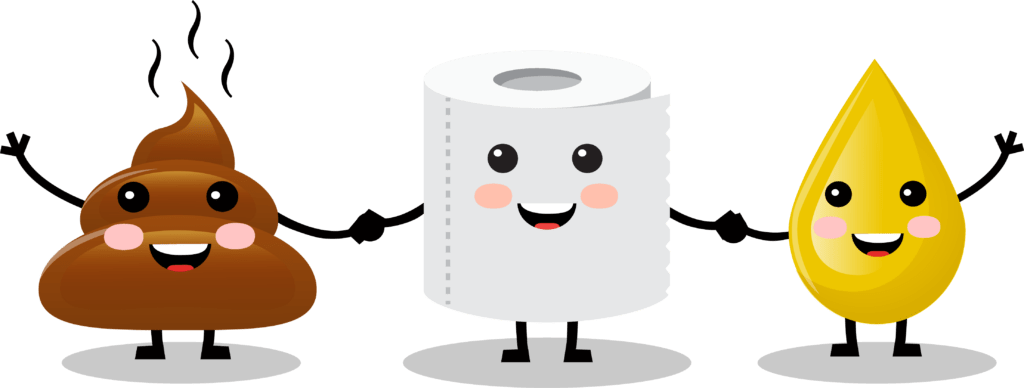
Public education remains the first step toward protecting wastewater infrastructure. But municipalities also need infrastructure designed for today’s wastewater, not the wastewater of decades past.
By eliminating the traditional wet well, the OverWatch® Direct In-Line Pump System helps utilities reduce maintenance, improve reliability, and rethink what’s possible in modern wastewater collection systems.
Ready to rethink your next lift station? Contact our team to learn how OverWatch® can help reduce maintenance while improving long-term performance.