Submersible Pump Applications Across Industrial, Municipal, and Well Systems
Key Takeaways
- Submersible pumps keep facilities running across construction, mining, food and beverage, power generation, medical, and commercial building environments.
- A submersible pump motor is inside the waterproof housing while the impeller is exterior and exposed to the pump liquid while submerged.
- Submersible pumps split into distinct types, solids-handling, dewatering, explosion-proof, corrosion-resistant, and well or sump models, each matched to a specific job.
- Well systems run on short, intermittent cycles, while municipal and industrial wastewater systems demand continuous duty from a submersible pump built for constant use.
- Selecting the right pump comes down to matching working depth, flow rate, and material construction to your exact site conditions.
A submersible pump works completely out of sight, so a wrong choice stays hidden until it fails and stops your process cold. Submersible pump applications span municipal wastewater lift stations, residential well systems, and industrial process lines that each call for different housing, seals, and motor protection. Industrial Flow Solutions engineers submersible units around that exact demand, matching materials and controls to whatever sits underwater in your system.
Let’s walk through how submersible pumps work, the main types on the market, and where each one fits across industrial, municipal, and well applications.
What Makes a Pump Submersible and How It Moves Fluid Underwater
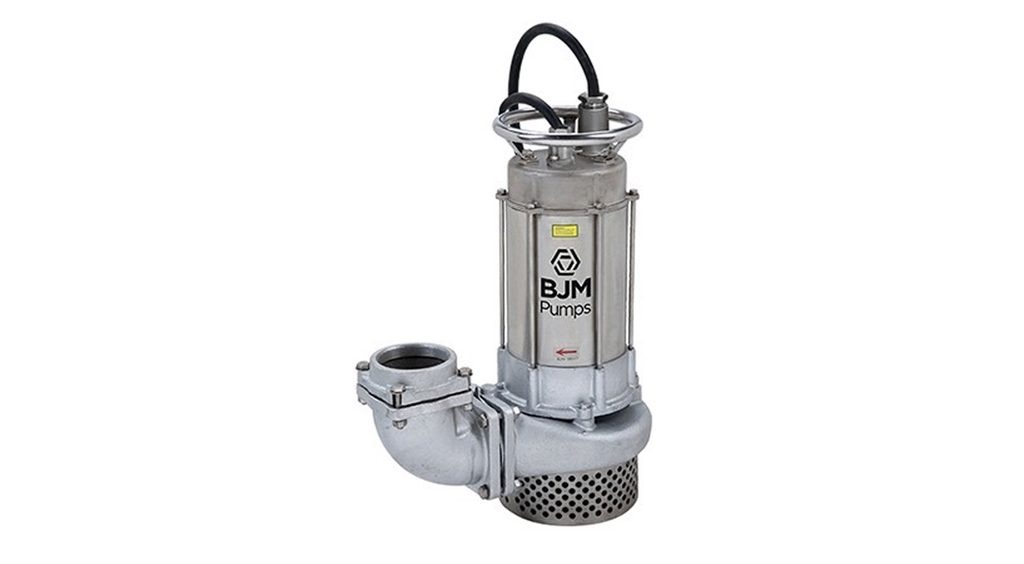
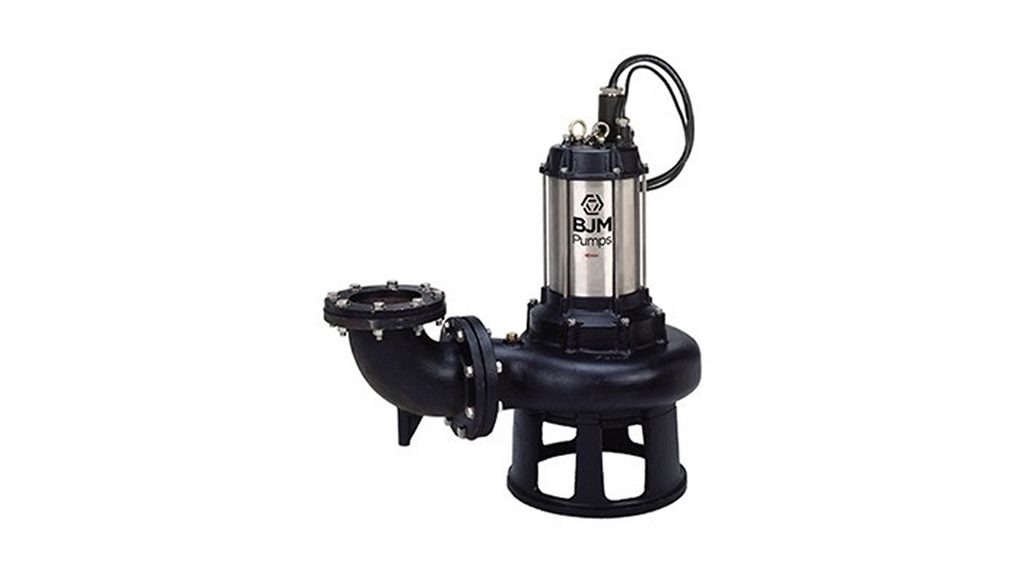
Submersible pumps seal the motor and impeller inside one waterproof housing, so the entire unit operates fully underwater instead of pulling fluid from above like a standard pump.
Once submerged, that impeller spins and forces fluid outward where it is contained by the volute, generating pressure, allowing it to flow through a discharge pipe straight to the surface. This design removes the priming and suction limits that restrict dry-mounted equipment, letting the pump draw wastewater, sludge, or well water directly from the source it sits in.
IFS builds its BJM Pumps and Stancor submersible lines around this principle, sizing the motor and impeller to match your flow rate and head requirements.
Types of Submersible Pumps Built for Different Jobs
Each type of submersible pump answers a different combination of solids content, chemical exposure, and hazard classification.
- Solids-Handling and Grinder Pumps: Shred rags, wipes, and debris to prevent clogs.
- Dewatering Pumps: Clear standing water fast from job sites, pits, and flooded equipment rooms with heavy-duty dewatering models.
- Explosion-Proof Pumps: Meet hazardous-location ratings for flammable vapors, dust, and combustible gas environments.
- Corrosion-Resistant Pumps: Stand up to acidic or caustic fluids using 316 stainless steel construction.
- Well and Sump Pumps: Lift groundwater or storm runoff from underground sources into a facility’s supply or drainage system.
Pump Systems Scaled for Heavy-Duty Wastewater Systems
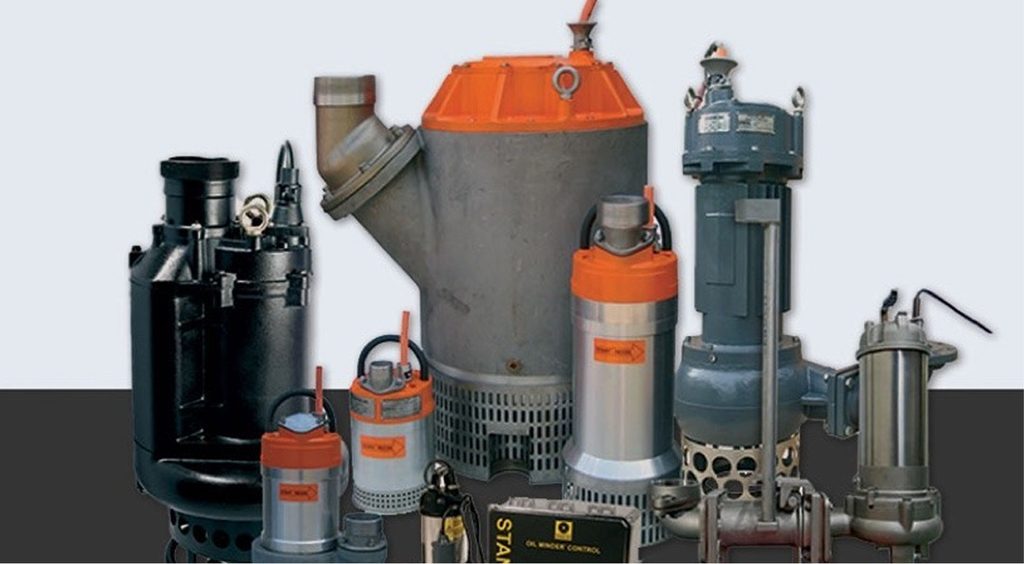
A municipal or industrial wastewater system is a high-demand environment, running a submersible pump on a continuous or near-continuous duty cycle that moves thousands of gallons per minute without a break in service.
That difference in scale from residential pumps reshapes motor duty ratings, seal life, and how often a crew needs to pull the unit for service. IFS engineers submersible units across the most complex applications, sizing pumps for a full municipal treatment plant lift station.
Matching Depth, Flow, and Materials to Your Application
Depth sets the first constraint, since every submersible pump carries a rated maximum working depth tied to its cable length, motor housing, and seal design, well before flow rate enters the picture. A pump built to sit 40 feet down a well casing needs different pressure tolerances than one anchored at the bottom of a 30-foot lift station wet well.
Flow rate and head then dictate impeller diameter and horsepower, while the fluid itself determines seal compound and wear-plate hardness, since sand and grit erode components that clean well water never touches.
IFS application engineers compare these variables against your site conditions before recommending a specific series.
What a Submersible Pump Is Used for Across Key Industries
Submersible pumps show up wherever a facility needs to move fluid that a dry-mounted pump simply can’t reach. The right application depends on the sector, the fluid, and the environment surrounding the equipment.
- Commercial Buildings: Keeping mechanical rooms and parking structures dry with solids-handling sump systems.
- Construction: Dewatering flooded excavation sites and foundations to keep crews working.
- Mining: Moving abrasive slurry and runoff through mine pumping systems built for constant wear.
- Food and Beverage: Handling solids-laden wastewater and clean in place washdown for food and beverage facilities.
- Power Generation: Running cooling and wastewater systems through explosion-proof units rated for the plant floor.
- Medical and Pharmaceutical: Managing corrosive chemical wastewater from manufacturing and sterilization processes.
That much variety means the right submersible pump for one facility can be the wrong choice for the one down the street. Getting flow, materials, or duty cycle wrong rarely shows up on day one; it shows up as a service call months into operation. Talk to our team before the wrong pump reaches your site, instead of after.
Talk to an IFS Application Engineer About Your Submersible Pump Application
Choosing a submersible pump comes down to matching a handful of variables (depth, flow, materials, and duty cycle) to conditions that look different at every site. Get any one of those wrong and the pump still runs for a while, until a seal gives out or a motor burns from running outside its rating.
Get them right, and the unit disappears into the background the way good equipment always does, handling wastewater, well water, or process fluid without another thought.
That’s the standard IFS builds every BJM and Stancor submersible pump to meet, across residential wells, industrial plants, and municipal treatment systems. Browse the full submersible lineup, then talk to an IFS application engineer about the pump built for your site.
Frequently Asked Questions About Submersible Pump Applications
Can a submersible pump run dry without damage?
No. Most submersible motors depend on the surrounding fluid to cool their windings, so running dry even briefly risks a burnout. Float switches and dry-run protection built into the control panel prevent this in a properly installed system.
How much maintenance does a submersible pump need?
Less than a dry-mounted pump, since a sealed submersible unit has no external bearings or packing to service on a schedule. Most maintenance comes down to periodic inspection, seal checks, and pulling the unit if performance starts to drop.
Are submersible pumps louder or quieter than standard pumps?
Quieter, in most cases. The fluid surrounding the pump and the housing itself absorb vibration and motor noise that a dry-mounted, above-ground pump transmits directly into the air.
Can you repair a submersible pump, or does it need full replacement?
Technicians can often rebuild a submersible pump, swapping in new seals, bearings, or impellers instead of replacing the whole unit. Repeated failures on the same pump usually mean it’s time to upgrade to a model better matched to the application.