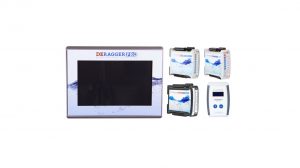
What Is a Sewage Pump System? Components, Types & How to Choose the Right One

A failed sewage pump system stops operations cold, and it rarely fails without warning signs that someone overlooked during the selection process. Sewage pump systems are the backbone of commercial and municipal wastewater infrastructure, yet too many engineers and contractors specify them without a full understanding of what they include, how they work, and which type fits the application.
Below, we’ve broken down sewage pump system components, types, and selection criteria so you can spec with confidence.
What Is a Sewage Pump System and How Does It Move Wastewater?
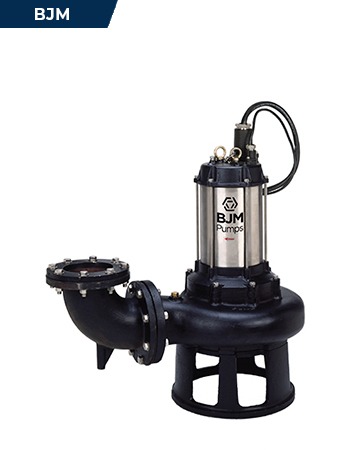
A sewage pump system collects wastewater at a low point and forces it through a pressurized discharge line to a sewer main or treatment facility when gravity flow is not an option. The system activates automatically when wastewater reaches a set level, triggering the pump to move the flow uphill, across long pipe runs, or into municipal wastewater infrastructure.
At its core, a submersible sewage pump system combines a submersible sewage pump, a collection basin, control panel, and discharge piping into one continuous-duty assembly. Other sewer pump varieties include dry-pit, end suction, self-priming and vertical column.
Applications that generate high-solids or fibrous waste add a sewage grinder pump to the system, which shreds solids before they enter the discharge line to prevent blockages.
Core Components of a Sewage Pump System
Every sewage pump system relies on the same core components working together. Specifying any one of them incorrectly puts the entire system at risk.
Here are the components:
- Wet Well / Collection Basin: Stores incoming wastewater until the pump cycle activates
- Submersible Sewage Pump or Grinder Pump: Moves wastewater through the discharge line; grinder models shred solids at the source
- Float Switches or Level Sensors: Detect wastewater depth and trigger pump activation at set thresholds
- Control Panel: Manages pump cycling, alarms, and system diagnostics
- Discharge Piping and Check Valves: Route pressurized flow out and block backflow
- High-Water Alarm: Signals operators when wastewater exceeds safe capacity
Sewage Pump Types Compared: Non-Clog, Vortex, Grinder, and Shredder Designs
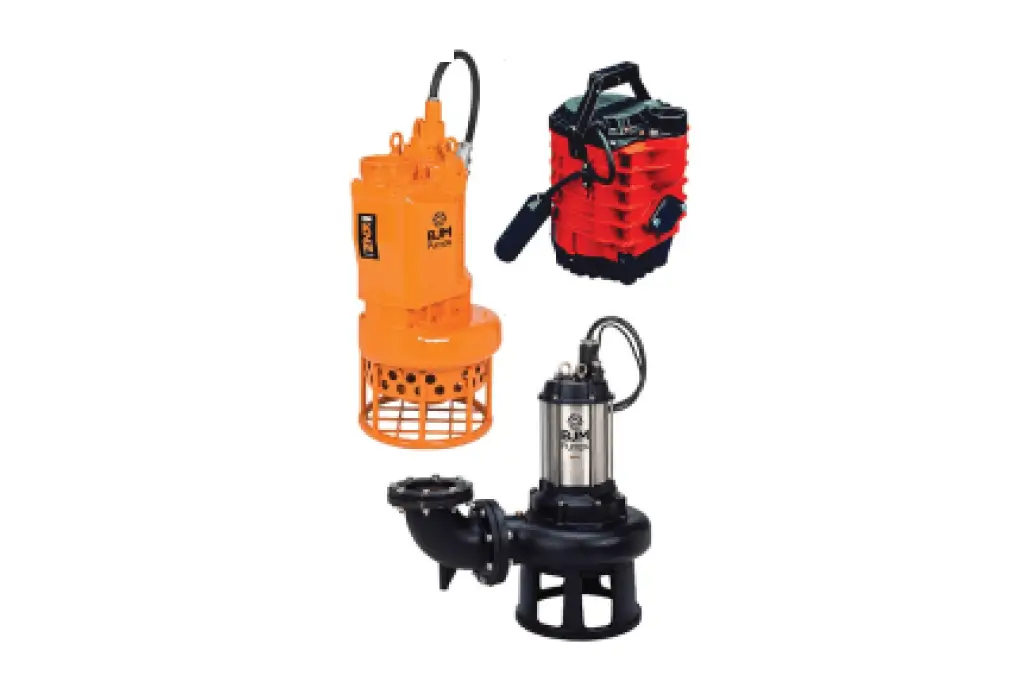
The way a sewage pump handles solids decides whether a station runs clean or clogs every few weeks. Non-clog, vortex, grinder, shredder, and channel pumps each move debris differently, which changes the solids they can pass, the head they can build, and how often they need service. Use the table below to compare them side by side.
| Pump Type | Fluid Handled | Solids Capacity | Best For | Key Advantage |
|---|---|---|---|---|
| Non-Clog Pump | Large-passage impeller moves solids through the pump without cutting them | Typically passes 2″ to 3″ solids, depending on discharge size | Municipal lift stations, commercial and industrial wet wells | High flow rates with low clogging risk on raw sewage |
| Vortex Pump | Recessed impeller creates a whirlpool that carries solids through, keeping most of them off the impeller | Passes large and stringy solids, depending on model | Wastewater with rags, grit, and stringy debris | Resists ragging and impeller wear |
| Grinder Pump | Cutter and stationary ring grind solids into a fine slurry at the inlet | Reduces all solids to slurry before discharge | Pressure sewer systems, long force mains, small-diameter lines | Builds high head in narrow lines without blockages |
| Shredder Pump | Cutting mechanism shears fibrous and bulky material before it reaches the impeller | Shreds wipes, rags, and fibrous solids | Stations with heavy wipe and rag loads, industrial wastewater | Cuts through material that tangles other designs |
| Channel Pump | Enclosed impeller with wide, multi-vane passages | Passes moderate solids, typically up to 2″ to 3″ | Municipal and commercial systems with steady flow | Higher efficiency and smooth, consistent flow |
How to Choose the Right Sewage Pump System for Your Application
Selecting the right sewage pump system starts with the specific demands of your site, not a catalog. Flow rate requirements, total dynamic head (TDH), and discharge pipe diameter all determine which pump and system configuration will perform reliably under your actual operating conditions.
A commercial sewage pump system handling variable inflow from a multi-story building operates under entirely different pressures than one serving a municipal wastewater collection network.
Matching the system to the application also requires accounting for duty cycle, installation environment, and local code requirements before you specify a single component.
Key Factors That Determine the Right Commercial Sewage Pump System
The right commercial sewage pump system comes down to technical and site-specific criteria that pump type alone cannot answer. Here are some key factors you have to consider before pulling the trigger on a sewage system:
- Flow Rate (GPM): Calculate peak inflow demand to ensure the pump keeps pace without short-cycling or running continuously at capacity
- Total Dynamic Head (TDH): Account for vertical lift, pipe friction losses, and discharge pressure to size the pump correctly for your specific run
- Pipe Diameter and Run Length: Longer runs and smaller diameters increase system resistance and directly affect pump selection
- Duty Cycle: Continuous-duty applications require motors and seals rated for sustained operation, not intermittent use
- Installation Environment: Corrosive chemicals, explosive gases, or high-temperature fluids narrow the field to pumps with specialized materials and certifications
- Regulatory Compliance: Confirm the system meets local building codes, EPA effluent standards, and any MSHA or FM certifications required for your industry
- Solids: Always consider the type, size and concentration of solids that your sewage pump will be managing before selection.
As wastewater systems grow, so do the demands placed on pumping equipment.
Higher incoming flows require greater pumping capacity, while larger collection systems may also face considerable solids and debris. Selecting a pump that meets the station’s hydraulic requirements while reliably passing solids is critical to maintaining system performance.
Industrial Flow Solutions Sewage Pump Systems for Commercial and Municipal Demands
Industrial Flow Solutions designs and manufactures commercial sewage pump systems through its BJM Pumps and Stancor product lines, with configurations spanning standard submersible sewage applications, high-temperature processing environments, corrosion-resistant installation, and explosion-proof facilities.
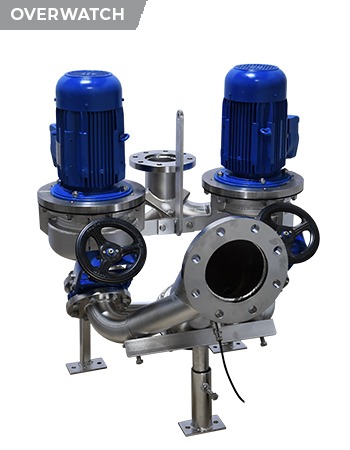
For sites that need to eliminate the wet well entirely, the OverWatch® Direct In-Line Pump System offers a compact, fully contained alternative that removes the traditional collection basin from the equation.
IFS application engineers match the pump, controls, and full system configuration to your exact site requirements before anything ships.
Talk to an IFS Application Engineer About Your Sewage Pump System
Specifying a sewage pump system means getting the components, pump types, and site conditions right the first time. Industrial Flow Solutions application engineers work directly with contractors, engineers, and facility managers to select, size, and configure the right system for the application. We manufacture and support every solution in-house, giving you one point of contact through specification, sizing, and installation.
FAQs About Sewage Pump Systems
What is the difference between a sewage pump and a sump pump?
A sewage pump moves raw wastewater, including solids and waste, from a collection point to a sewer main or treatment facility. A sump pump removes groundwater or clean water that accumulates in a basement or below-grade space. Sewage pumps handle far higher solids loads and require more durable construction than standard sump pumps.
How long does a sewage pump system last?
A well-specified and properly maintained sewage pump system typically lasts 7 to 15 years, depending on the application, solids load, and operating conditions. Pumps in high-demand commercial or municipal environments may require component replacement sooner than those in lower-load applications.
What causes sewage pump failure?
The most common causes include clogged impellers from non-flushable solids, motor burnout from dry running or overload, and seal failure from corrosive or high-temperature wastewater. Undersized pumps that run continuously beyond their rated capacity are also a leading driver of premature failure.
How often should a commercial sewage pump system be serviced?
Most commercial sewage pump systems need inspection every 3 to 6 months, with a full service at minimum once per year. High-demand facilities handling heavy solids loads or continuous-duty cycles may require more frequent checks to catch seal wear, sensor drift, and impeller buildup before they cause downtime.