Flush Smart Month: What Really Happens When You Flush a Wipe?
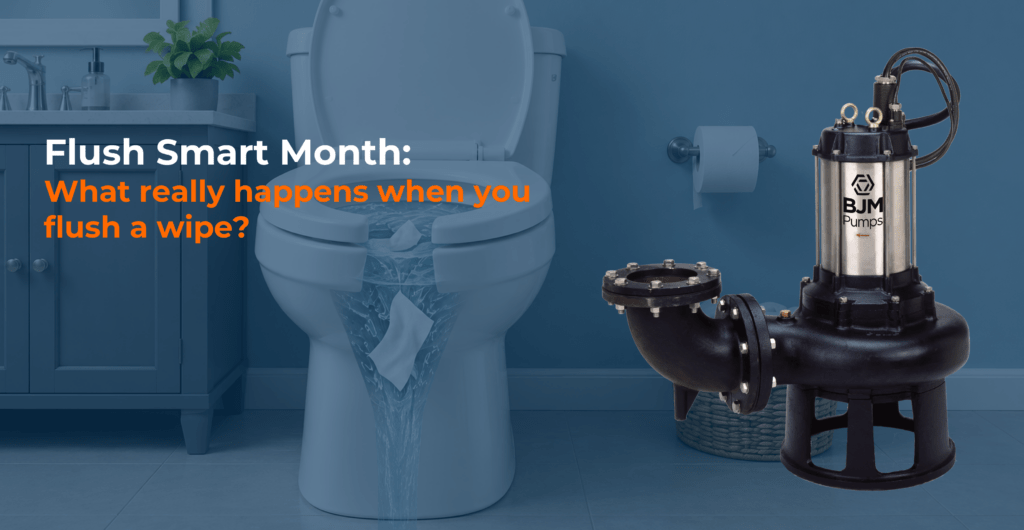
Every July, the Responsible Flushing Alliance’s Flush Smart Month campaign reminds consumers to flush only the 3 Ps: pee, poo, and toilet paper. It’s an important message because many products labeled “flushable” don’t actually break down like toilet paper. Instead, they travel through wastewater systems, creating problems for homeowners and municipalities alike.
So what really happens after you flush a wipe?
Items like flushable wipes, paper towels, feminine hygiene products, dental floss, and other non-flushable materials continue to create costly problems throughout wastewater systems. From clogged household plumbing to damaged municipal lift stations, improper flushing affects homeowners, utilities, and taxpayers alike.
For municipalities, the challenge isn’t just educating the public; its keeping wastewater moving when the wrong materials inevitably enter the system.

Step 1: It Leaves Your Toilet
The Truth About “Flushable” Wipes
Despite the label, most flushable wipes do not break apart nearly as quickly as toilet paper.
Unlike toilet paper, which begins dispersing almost immediately after being flushed, many wipes are manufactured with durable synthetic or blended fibers designed to remain intact during use. While they may successfully pass through a toilet, they often remain whole as they travel through sewer systems.
Step 2: It Travels Through Your Home’s Plumbing
Just because a wipe disappears from sight doesn’t mean it’s gone.
As it travels through a home’s plumbing, a wipe may snag on rough pipe walls, catch on pipe joints, or become trapped in older cast-iron piping. In homes with septic systems or low-flow plumbing, wipes are even more likely to accumulate rather than break apart like toilet paper.
These conditions can lead to:
- Clogged residential plumbing
- Sewer backups
- Septic system issues
- Expensive plumbing repairs
- Damaged sewer laterals
For many homeowners, what seemed like a harmless flush can quickly become a costly plumbing problem.
Step 3: It Enters the Municipal Sewer
Once a wipe leaves a home, it joins wastewater from thousands of other homes and businesses. Along the way, it mixes with grease, food waste, paper towels, and other debris flowing through the collection system. Individually, a single wipe may not seem significant, but together these materials can create large blockages that restrict flow and damage wastewater infrastructure.
Improper flushing isn’t simply an inconvenience; it’s an expensive infrastructure problem.
Every year, municipalities spend hundreds of millions of dollars removing debris, repairing wastewater equipment, and responding to preventable sewer blockages caused by non-flushable materials.
Public education campaigns like Flush Smart Month exist for a reason.
Only flush the 3 Ps: pee, poo, and toilet paper. Everything else belongs in the trash.
Step 4: It Reaches the Lift Station
Eventually, the wastewater reaches a municipal lift station, where pumps move it to the next stage of treatment. By this point, operators aren’t dealing with clean water; they’re handling a mixture of wipes, rags, grease, plastics, food waste, and other debris collected throughout the wastewater system.
Common materials found in lift stations include:
- Flushable wipes and baby wipes
- Paper towels
- Fibrous materials
- Plastics
- Food waste
- Fats, oils, and grease (FOG)
- Miscellaneous debris
Traditional pumps can struggle when these materials wrap around the impeller, reducing hydraulic efficiency and eventually causing pump failure.
For maintenance crews, this often means emergency callouts, manual cleaning, increased downtime, and higher operating costs.
Step 5: How Utilities Fight Back
While no pump can prevent people from flushing the wrong materials, properly designed solids-handling pumps can help wastewater systems continue operating reliably under difficult conditions.
That’s where BJM Pumps® Solids-Handling Pumps make a difference.
Designed for demanding municipal and industrial wastewater applications, BJM Pumps combine rugged construction with wear-resistant shredding technology that tears apart difficult solids before they become costly maintenance problems.
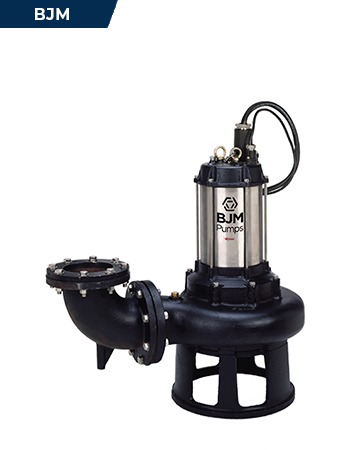
Featured Solution: BJM Pumps® SK Series Shredder Pump
The SK Series is specifically engineered for demanding wastewater applications where fibrous materials frequently cause clogging.
Rather than allowing wipes and debris to wrap around the impeller, its heavy-duty shredding system tears, breaks, and processes solids before they can restrict pump performance.
Key features include:
- Tungsten carbide-tipped shredding impeller
- Handles solids up to 3.5 inches
- Heavy-duty stainless steel motor housing
- High chrome wear components
- Seal Minder® moisture detection system
- Available in sizes from 1–20 HP
These pumps are engineered to process:
- Heavy solids-laden liquids
- Fibrous materials
- Fats, oils, and grease (FOG)
- Food waste
- Plastics
- Solids up to 3.5 inches, depending on the model
The result is improved reliability, reduced downtime, and lower maintenance costs for wastewater operators.
Case Study: Shredding Wipes & Cutting Costs
One hospital experienced exactly the kind of challenges improper flushing creates and found a long-term solution with the BJM Pumps® SK Series.

A 437-bed medical facility in Panorama, California, relied on seven sewage ejection pits to move wastewater into the municipal sewer system. However, the hospital faced chronic clogging problems caused by disposable wipes and other non-flushable materials. Because the pumps operated 24/7, downtime became frequent and expensive. Emergency maintenance calls, often during nights, weekends, and holidays, cost between $4,500 and $8,500 per visit.
The hospital needed a long-term solution that could reliably shred wipes and other flushed solids while reducing maintenance costs.
Its engineering partner recommended the BJM Pumps® SK Series Solids-Handling Shredder Pump. With continuous 360-degree shredding action, the SK Series effectively processes wipes, rags, and solids up to 3.5 inches in diameter. Two pumps were installed in a duplex arrangement, delivering 570 GPM at 59 feet of head.
Since installation, the hospital has experienced smooth operation with eliminated clogging issues, fewer emergency maintenance calls, and significantly lower maintenance costs.
Education and Equipment Work Together
Public education campaigns like Flush Smart Month play a critical role in protecting wastewater infrastructure. The fewer wipes and non-flushable products entering the sewer system, the fewer blockages utilities must address.
But wastewater professionals also understand that education alone isn’t enough. People will continue to flush items they shouldn’t. That’s why selecting dependable solids-handling pumps is just as important as encouraging responsible flushing.
Protect Your Pumps and Your Wastewater System
So, what really happens when you flush a wipe?
It doesn’t simply disappear.
It travels through home plumbing, municipal sewer systems, lift stations, and wastewater infrastructure, creating challenges every step of the way.
The best solution starts with responsible flushing. But when improper flushing inevitably occurs, dependable solids-handling pumps help municipalities keep wastewater moving safely and efficiently.
This Flush Smart Month, help spread the message: Only flush the 3 Ps:pee, poo, and toilet paper.
For wastewater professionals, BJM Pumps® provides another layer of protection by delivering reliable solids handling, reduced downtime, and lower maintenance costs in demanding wastewater applications.
Contact one of our experts today to learn more: [email protected]