This Pair of Technologies Can Be a Cure for Pump Station Woes
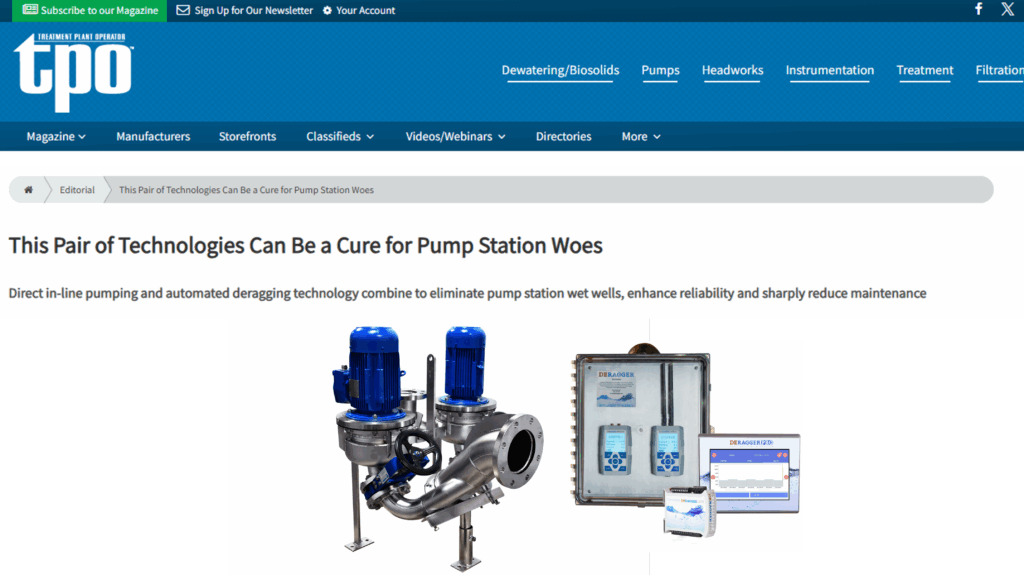
Article Feature in TPO Magazine – January 2026
Direct in-line pumping and automated deragging technology combine to eliminate pump station wet wells, enhance reliability, and sharply reduce maintenance.
Pump stations are essential to wastewater collection, but also a source of maintenance and other issues for operators.
The main culprit is the wet well, where hydrogen sulfide can build up, cause odors and corrode infrastructure, and where assorted debris clogs pumps, which then have to be manually cleaned. Now a pair of innovative technologies help put such concerns to bed.
Industrial Flow Solutions offers the OverWatch direct in-line pump system, which eliminates the wet well, combined with DERAGGERPro intelligent control that prevents pump clogging and feeds back data that operators can use to enhance pump reliability and energy efficiency.
The manufacturer says the two technologies transform pump stations from maintenance-intensive liabilities into clean, intelligent and continuously self-optimizing assets. Brad Hitselberger, business development manager with Industrial Flow Solutions, talked about the offerings in an interview with Treatment Plant Operator.
TPO: What was the motivation for bringing this technology to market?
Hitselberger: It originated in France in 2003, and we acquired it in 2019 with a vision for modernizing collections systems. In the wastewater industry, a lot of things haven’t changed for decades. Wet wells have been a source of headaches including corrosion and odor from hydrogen sulfide, pump ragging and inefficient pump cycles. Our goal with these innovations is to make life easier for people who work around wastewater. We married OverWatch, which is the pumping technology, with DERAGGERPro, which is the intelligence.
TPO: What differentiates this combined offering from traditional approaches?
Hitselberger: It’s a complete reengineering of what a pump station can be. It’s a mechanical innovation that saves operators a lot of time and energy, paired with adaptive anti-ragging control and real-time data monitoring that allows operators to be proactive.
TPO: In basic terms, how does the OverWatch system work?
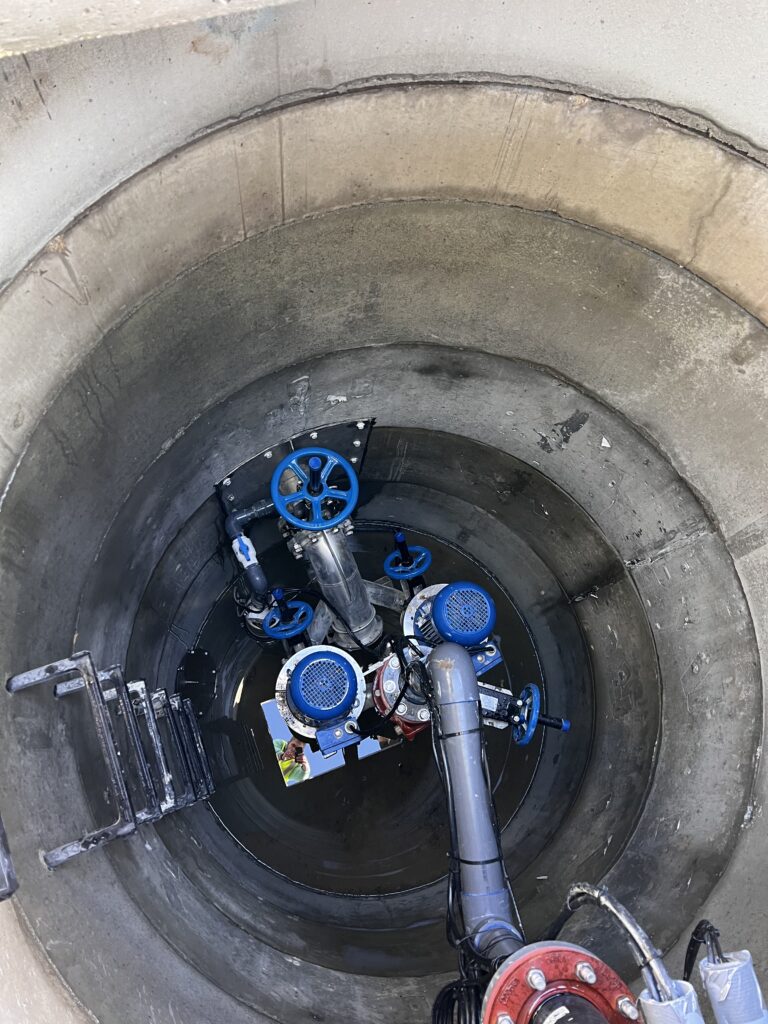
Hitselberger: A typical lift station has a wet well with pumps submerged in a corrosive environment. The wet well fills and the pump cycles on and off. OverWatch connects directly to the gravity influent line and eliminates the wet well. It continues pumping as wastewater comes in. It creates a clean environment with no H2S gas, no debris and no rags to deal with. The pumps use a vortex-style impeller that can pass solids and prevent accumulation that would lead to blockages in standard submersible pumping setups. In summary, it creates safer, odor-free conditions for work crews and nearby communities.
TPO: How does the DERAGGERPro complement the OverWatch technology?
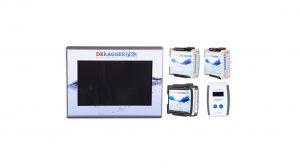
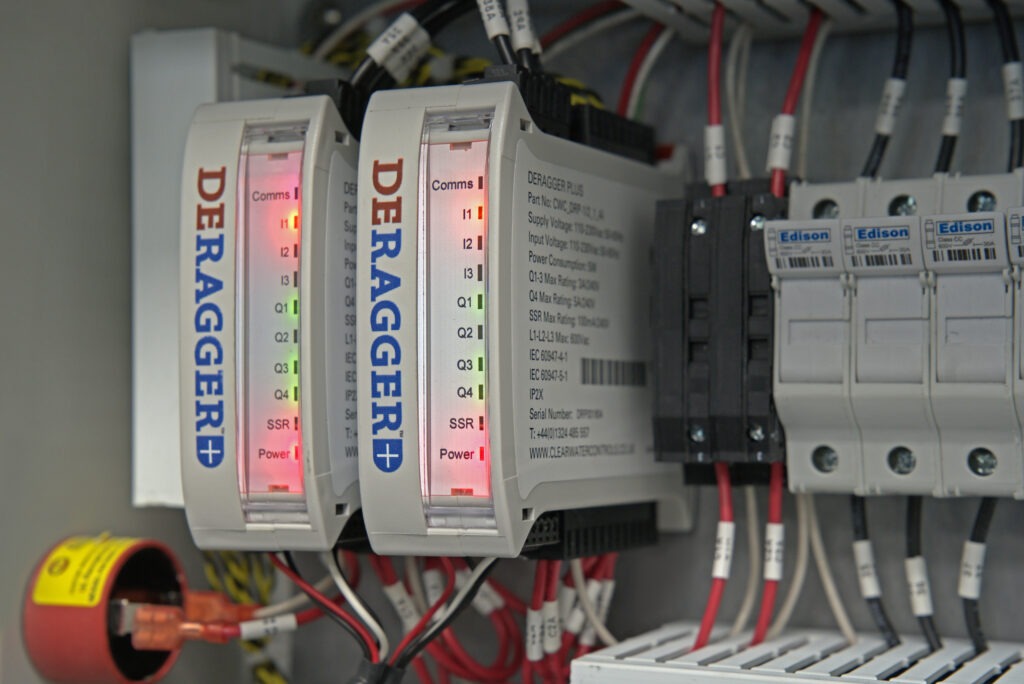
Hitselberger: It senses blockages before they become a problem and clears them autonomously. It’s a self-clearing and self-optimizing system. It continuously monitors the power data of the motor, and when it detects early signs of a rag or other obstruction, it executes a short reverse-forward cycle to overcome that issue. The impeller passes most solids, but it will also shred material if necessary. And it provides data that enables operators to make informed decisions.
TPO: What kind of data does it provide, and why is that valuable to operators?
Hitselberger: It monitors energy usage, runtime hours, torque changes and start frequency, and it trends the data so that operators can set up condition monitoring to enable actionable decisions. If, for example, it shows that the motor bearings are starting to fail, the operators will get a callout alarm before the failure happens. If it sees pump performance declining over time, it alerts operators to go out and investigate. It supplies data that matters, and it allows operators to fully customize how they want to use it.
TPO: Are these technologies deployed only in collection system pump stations?
Hitselberger: The majority of installations are in lift stations outside the fence, but we also have some inside the wastewater treatment plant at influent pump stations, in sump pits, and for return and waste activated sludge pumping.
TPO: How easy are these technologies to learn and operate?
Hitselberger: The control panel has no ladder logic, and there is no special software to download and pay subscriptions for. It’s a plug-and-play device; users can make changes right on the screen. There is no need to hire a PLC integrator to change how the pump station operates. It’s like using a smartphone or iPad; you swipe left, swipe right and hit buttons.
TPO: How much maintenance is required?
Hitselberger: First of all, the system eliminates the nuisance maintenance inherent with wet wells. The equipment itself is all made of stainless steel for long wear and extended pump life. By removing a few nuts and bolts, technicians can access anything inside the pump. They can swap out seals in 15-20 minutes. There’s a stone trap clean-out on the back side of the pump that we recommend checking periodically.
TPO: Does the system enable energy savings?
Hitselberger: The pumps are fitted with variable-frequency drives, which help reduce energy consumption. The VFD is always hunting for the point on the pump curve where it uses the optimum amount of energy. On top of that, the DERAGGERPro provides data that enables operators to detect and address inefficiencies and prevent costly failures.
TPO: Is there a sweet spot in size or other parameter where these technologies function optimally?
Hitselberger: It can handle any amount of influent with multiple setups, whether it be triplex, quadruplex or six or eight pumps. Our largest pump is rated at 400 feet of head on the pressure side and 5,000 gpm on the capacity side. It has a large body and a 200 hp motor. We can supply a body that has three of those pumps on it, so for example, if the user has a duty point of 13,000 gpm, we could provide a triplex that has three pumps running at around 4,300 gpm.
TPO: What is an example of how this technology has solved a problem?
Hitselberger: A municipality had a lift station outside a high school that kept clogging because students were flushing pens, pencils and other debris. Every time the station clogged, they got to go home for the day. Once OverWatch was installed, that problem disappeared.